Safety
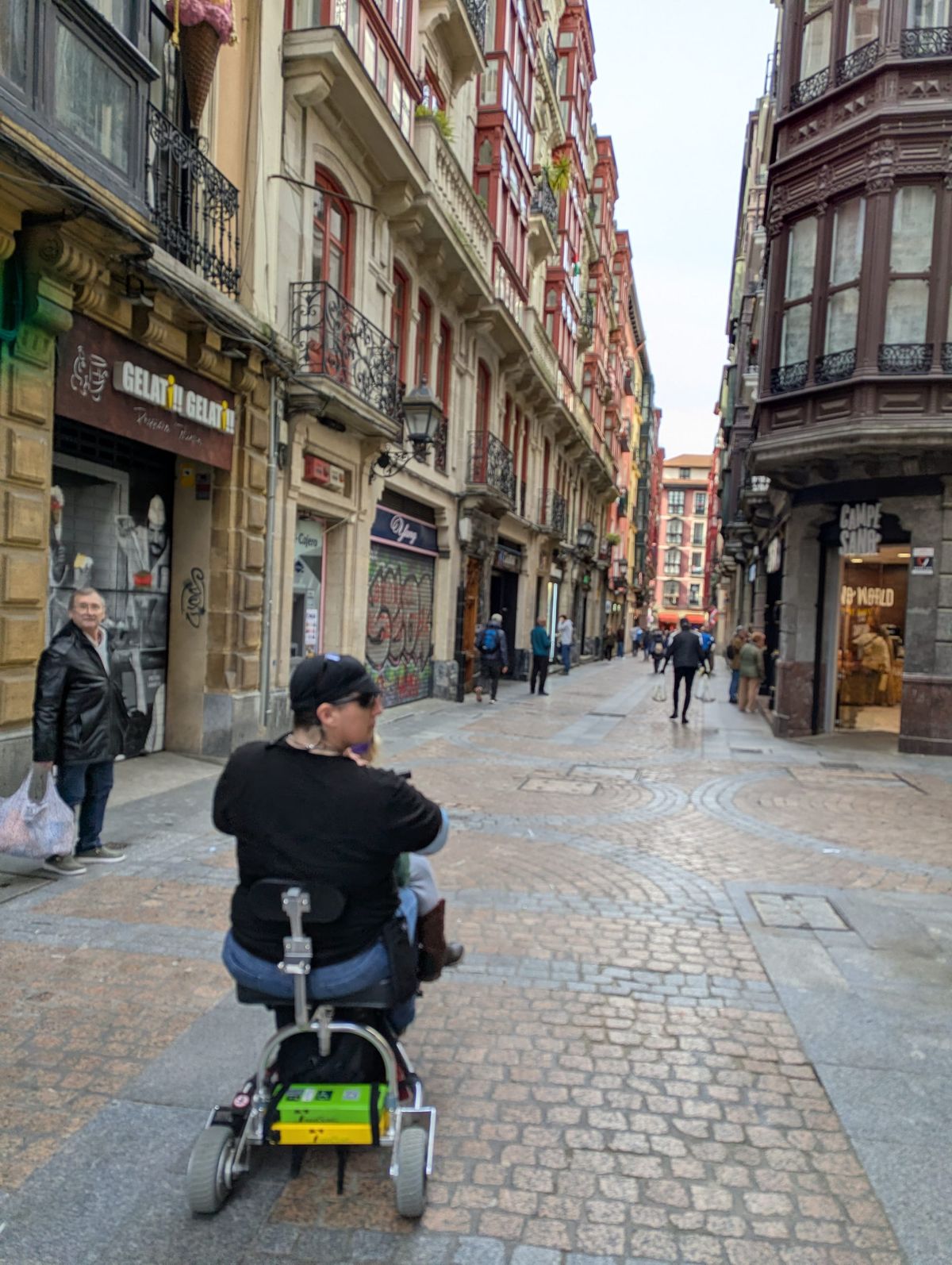
Even though I knew it was coming, even though this is close to the top reason we left the US, I was completely unprepared for the dramatic shift in my felt experience of safety upon landing in Spain.
I was hoping and expecting to feel safer as a queer and trans person. And that alone is a huge deal! The euphoria of having options of where to live is real, not being limited to certain progressive cities in order to be comfortable holding hands in the street. Even in Seattle, bottles and slurs have been hurled at me from cars, notes with death threats were slipped into my locker, etc... It has always been boringly normal to experience the odd homophobic and/or transphobic macro aggression, even while I was legitimately grateful to be as safe and accepted as I was.
Here, there are still homophobic and transphobic attacks occasionally. The last assault (their word) I read about consisted of a few slurs hurled across the street at a group of (apparently) queer people. This not only made the news, but also received a serious response from the local authorities, and a pro queer acceptance rally the following weekend. It is laughable to imagine a similar response in the US.
So yes, I do feel safe here as a queer person. I haven't felt even the smallest iota of aggression or discomfort related to my gender expression or queerness. That is an utterly amazing relief, and enough.
But there are so many additional ways I feel safe, that I hadn't anticipated. I feel safe for the first time ever as a pedestrian. The difference is stark, partly because I honestly didn't know it was possible to feel safe around drivers and cars.
Here, drivers unquestioningly give pedestrians, then bicyclists, the right of way. Most crosswalk in the cities we've explored have lights and walk signs, and there are no "beg buttons" (update: in some parts of Santander we have now seen beg buttons) . Everything is on timers, so there is never long to wait to cross the street, and both drivers and walkers know what is expected of each other. No one is grumpy to have to stop, it's just what is.
In Seattle, the most common way I crossed the street was to wait for when there was enough room between cars that I could cross without the driver needing to slow down. I would often feel pressured to hurry. Sometimes, I would "force" drivers to stop by "aggressively" stepping toward the road or off the curb, especially if I had been waiting awhile. While pedestrians always have legal right of way at marked and unmarked crosswalks, one has to be very assertive to get drivers to stop.
In Barcelona and almost all the areas of northern Spain we've been to, all crossings are clearly designated with street markings, and most of them even have stop lights and walk signs on timers. Drivers expect to stop for pedestrians when there is not a stop sign, and they do stop, every time. Even when they have to stop quickly. It is mind-blowingly different, and so, so comfortable.
I also feel comfortable as a female bodied person. We were astonished in Barcelona to frequently see young women ambling alone on the sidewalk underneath our apartment at 2am. They weren't hurrying, or walking with their keys between their fingers. They looked relaxed. I haven't seen or heard a single aggressive or unpleasant "flirtatious" interaction between men and women.
When I look at statistics, I see that the rate of reported rapes in the US is eight times higher than the rate in Spain, even though Spain is estimated to report rapes more often. The assault and murder rate is similarly lower. Spain is ranked at 81st in the world for violent hate crimes. So the perception of safety is backed up by data.
Spain is not a magical land of equality and peace, and there are definitely problems. There is still a machismo issue here, and in 2022,93% of intentional homicide victims by an intimate partner were women (citation here). But Spain is actively working on gender equality while the US is sliding backwards. Over 40% of Spain's parliament are women, as opposed to 28% in the US. (I couldn't find data on queer, trans, or nonbinary people in office), and there are meaningful laws addressing gender equality, pushed by large-scale annual demonstrations on International Women's Day.
And all this isn't even mentioning the increased safety for children and parents. The covered and well lit playgrounds, the cultural delight of and protection for children, the lack of judgementalism around free range parenting, etc.
My heart rate variability, a physiologic measure of nervous system health which is directly impacted by the presence or absence of chronic fear, has stabilized and dramatically improved. The impact of experiencing safety is life-changing and cannot be overstated.