What I'm sad to have not left behind
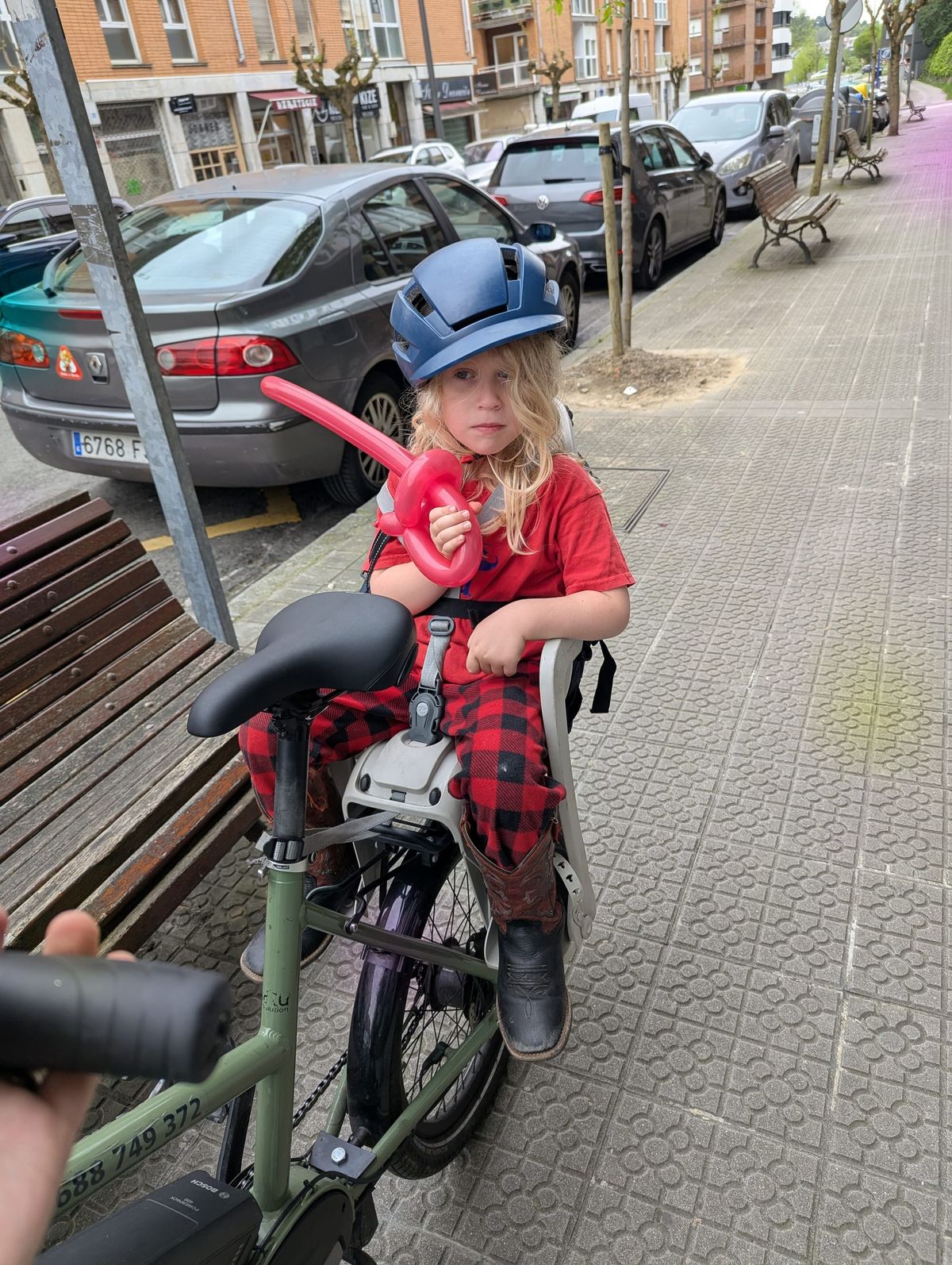
Pippin is doing their first organized Spanish activity this week.
It's Spanish spring break (the week before & after Easter), so I signed Pippin up for circus camp. It seemed like the easiest introduction to joining in on a Spanish activity because Pippin had taken circus class in Seattle and loved it, which would mean they'd be familiar with many of the activities throughout the day, making it easier to figure out what to do without necessarily understanding the language. (I think they are getting some English language support, also.)
They were super brave the first day.
We skipped the second day because they were exhausted.
Today is the third of four days.
Pippin asked me to stay at the circus class with them because it would help them worry less.
None of the adults in the family has done something this brave yet: just immersing ourselves into a Spanish activity without any supports. It makes so much sense to want support.
So, I messaged the school to ask.
The answer I got is the same answer I would get from any American child activity that doesn't have a value of inclusion: that if Pippin got to have a parent there, all of the kids would want their parent there, and it would make it impossible for the kids to focus on the activity.
This is the first line of defense against providing accommodations in so many places. "If we do that for you, we'll have to do it for everyone, and it will ruin it/cost too much/otherwise be unfeasible."
I mean, sometimes the accommodation should be for everyone because it actually makes it more accessible for everyone. (See curb cuts and all of the people who benefit daily from them.) And, some things really are just things that some people need because people are different and if you want to include everyone, it's ok for some people to have accommodations that don't apply to others.
Regardless, this particular line of reasoning about allowing one parent equaling all the parents joining is just false. We know of a family whose kid attended the disability inclusion focused preschool that Pippin attended in Seattle a few years before Pippin did. That kid needed their parent there every day for the whole time for a while before he was ready to be there without a parent. It was what he needed for school to be accessible to him, to succeed at attending school.
And, it didn't turn into a mess of kids begging for parents to stay and parents staying and preschool being ruined.
It just made it accessible to someone who couldn't have accessed it otherwise.
Pippin did actually make it to circus camp today, only about two hours late, and not because they were accommodated, but because they decided to be brave despite not getting the very reasonable accommodations they requested. And because I promised to sit outside of the building on the bench so that if they needed me, they could run right out and find me.
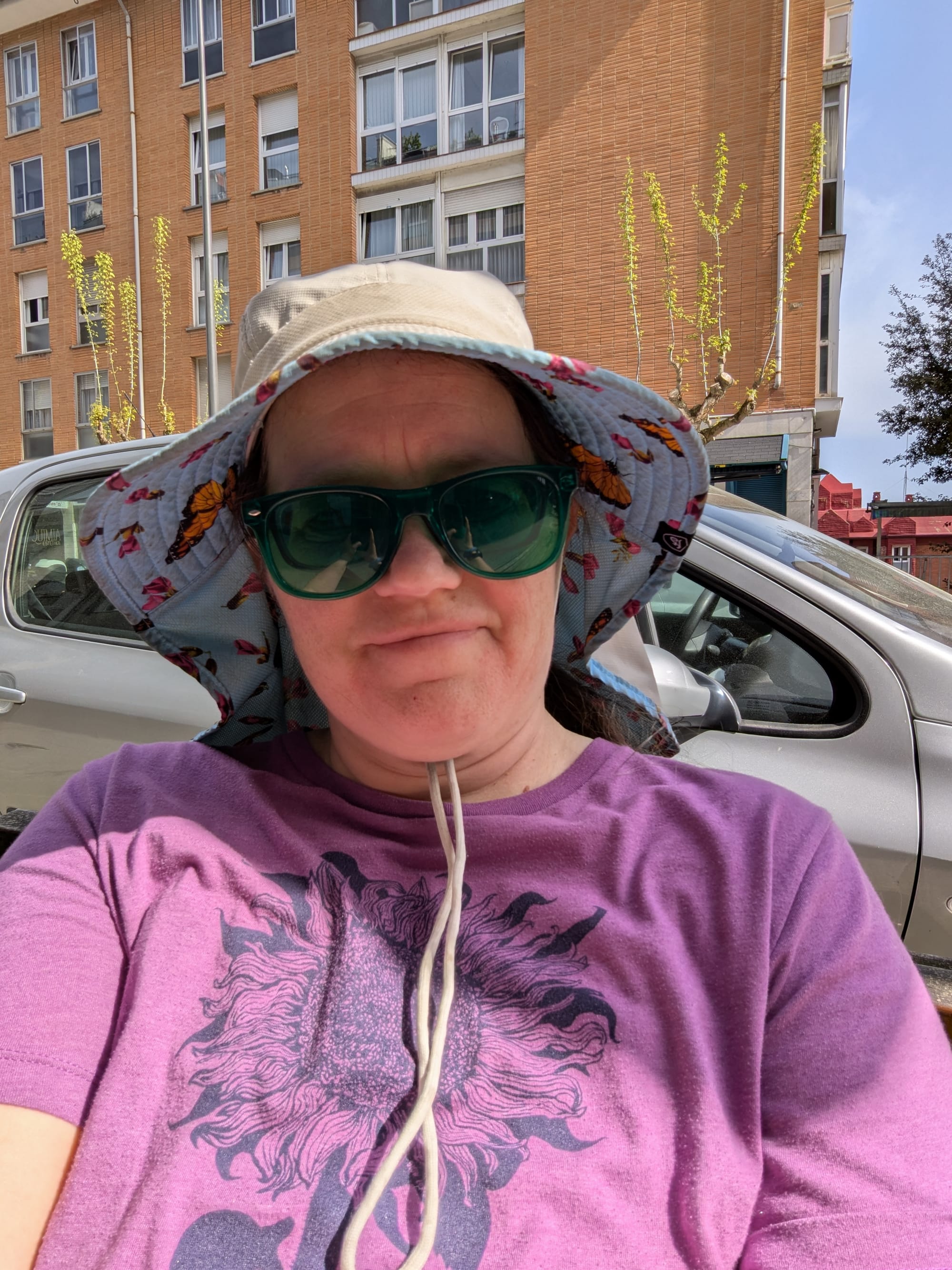
Me, in sunhat, waiting on the bench outside of circus camp.
It's truly a challenging pattern to deal with. It also seems to come with, both in the US and in Spain, the idea that as long as the kids seem happy/engaged to the teachers during the activity, there's not a problem. Which is not my standard for whether there's a problem or not. If my child says there's a problem, there's a problem. Teachers (adults in general) are so often ready to dismiss problems brought up by children if they don't understand or see the problem themselves. Which is why so many of us grow up with the sense that our distress doesn't matter.
The solution in the US was to switch schools to a school that had values and practice of inclusion that we could lean into.
Does that same kind of place exist here? "Inclusion" does seem to be a buzz word here, like it is in (some parts) of the US. But when you don't understand the language or culture very much, how do you find the place where the buzz words translate to deeply held values and practice?